
Our Fleet

There are not many motorcycles out there that are as easy to ride as the Honda Grom. Don’t let the smaller wheels fool you—this is a legitimate motorcycle with all the typical controls. Its low seat height, light weight, and very tight turning radius give even the most intimidated new rider the confidence to learn.
Completely out of its element on the highway, the Grom really shines on the range, where its maneuverability stands out. It is one of the most fun machines we have and is a favorite among some of the instructors. We have even equipped our fleet with one lowered Grom, thanks to aftermarket lowering brackets and a modified, shorter kickstand for riders who require an even lower seat height.
We currently have seven of these motorcycles in our fleet.
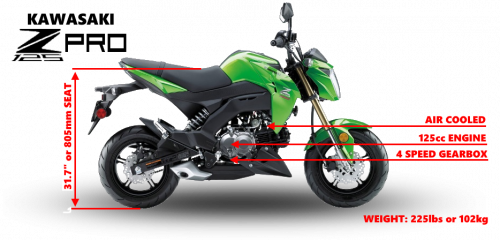
Not to be outdone by Honda and its Grom, Kawasaki brings its own version to the table. The Z125 Pro is just as easy to ride as its competitor from Honda. It delivers just enough power from its air-cooled, single-cylinder engine and is paired with a traditionally shifted 4-speed transmission.
Take a spin on the Kawasaki, then try the Honda— which one will you prefer?
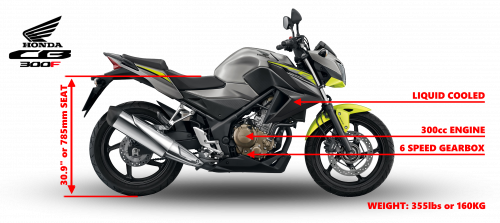
While our CBs are considered “beginner bikes” in the motorcycle world, most of our range exercises favor smaller, lighter machines. We aim to ensure that every student interested in riding our CBs gets seat time by the end of the weekend.
This CB300F has a single-cylinder, fuel-injected engine that offers respectable sound and power. Where it gets interesting from a teaching perspective is the brakes. Our two CBs, our WR, and our G310R are the only motorcycles in the fleet that feature an anti-lock braking system (ABS). This allows for interesting discussions and perspectives during our emergency braking and collision-avoidance exercises.
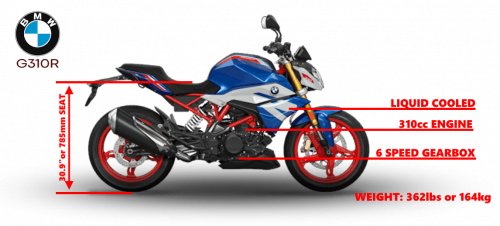
Yes, we have a BMW G310R in the fleet. This agile “roadster” is maneuverable, easy to handle, and sporty all at the same time. It is currently the only motorcycle in our fleet that uses an electronic “ride-by-wire” throttle with no throttle cable. This makes the throttle response stable and predictable for new riders.
This machine also features a slipper clutch, which makes shifting gears as smooth as silk—especially on downshifts. It also has ABS. With a similar seat height to our CBs, the G310R offers a slightly more upright riding position and a slightly better turning radius to navigate a range full of pylons.
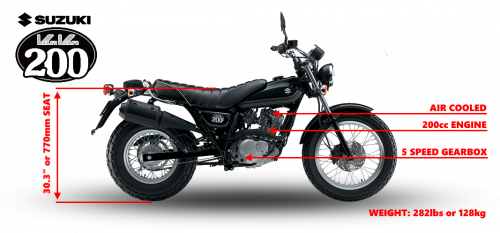
Old School. You have got to love the “new” Suzuki VanVan. They went back to the past and dug up a bike from the seventies, but used today’s technology. These new Van Vans use a modern frame design that allows the engine to be mounted much lower than it was originally, for excellent stability at slow speeds. This engine now features a modern fuel injection system. This bike uses the same sized tires as our Yamaha TW200, which give it a unique “beach bike” look. Check out the giant, soft banana seat from the 70’s that will have you riding in comfort all day. Our VanVans are a natural fit for our Beginner Course and could very well be our “best training motorcycle.” We currently have 5 of these increasingly rare machines in our fleet.
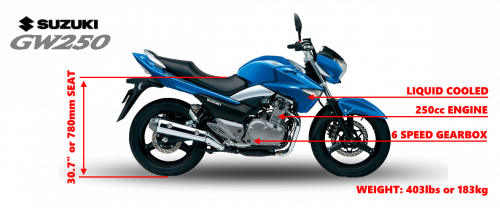
On paper, our GW250s are full sized motorcycles. This machine is a top choice of riding schools across North America. This bike would be aimed at our bigger and perhaps more experienced students who are more comfortable with the power of a 250cc twin engine. With more power comes a slightly heavier clutch that might need more muscle than our smaller bikes. We have one of our GWs set-up with a center stand, giving us a chance to demonstrate it’s proper use. Despite it’s size and weight, our GWs can easily negotiate all of the slaloms and slow speed maneuvers at Atlantic Moto Skills.
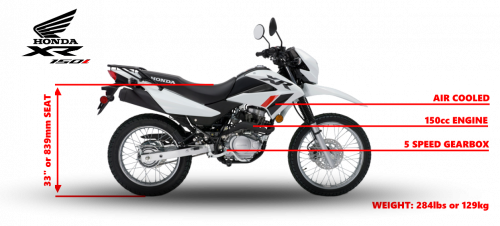
The new Honda XR150L has finally been released in Canada, and we are quite pleased, to say the least. Dual-sport motorcycles tend to have tall seats, making it difficult at times to get your feet down. The new XR has slightly smaller front and rear wheels (19 and 17 inches, respectively), making the seat a bit more approachable for the inseam-challenged, while still maintaining the simplicity and durability we value in a training motorcycle.
Carburetors are quite rare in modern motorcycles, especially on a 2023 model. You will have to get used to using a choke on this bike, along with our TWs. What has been upgraded, however, is the engine’s internal counterbalancers, which bring a modern smoothness to this quiet and gentle single-cylinder engine.
The new XR is a great fit for us at AMS and an excellent choice for your first ride.
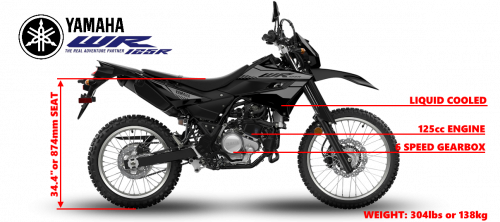
New for 2026, Yamaha has brought back the “dual-sport” WR in a modern 125cc size. This do-it-all machine wraps performance, accessibility, and fun into one adventure-ready package. The 125cc, fuel-injected engine features modern technology, such as Variable Valve Actuation, that punches well above its size.
With a 34.4″ seat height and full-size 21″/18″ wheels, this bike is just about perfect for our taller riders. The new WR125R is the ideal all-terrain adventure companion for any skill level and a great machine for exploring the dirt roads and trails of New Brunswick.
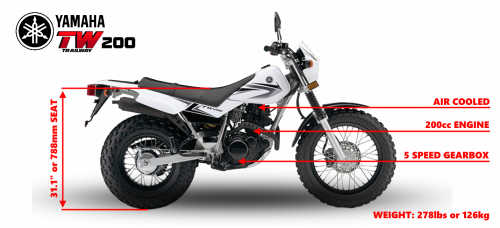
Instructors of this course have been teaching students to ride on Yamaha’s TW for well over 3 decades. The design of this ridiculously dependable machine has been virtually unchanged since it’s introduction in 1987; the same year that an explorer famously reached the North Pole riding one.
This motorcycle features similar attributes of our other dual sport motorcycles, but with lower gearing to enhance it’s slow speed abilities, as well as a low seat to help shorter riders get their feet planted. It simply could not be a motorcycle course without a TW in the fleet.
We have 2 of these and our biggest challenge is getting the instructors off of them.
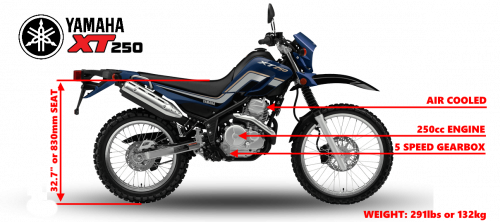
The XT is Yamaha’s current small-displacement dual-sport motorcycle. It has similar dimensions to our Yamaha WR125 but uses a slightly less high-tech 250cc air-cooled engine. Despite being one generation older within Yamaha’s dual-sport lineup, it still features internal counterbalanced shafts to smooth out engine vibrations typically associated with single-cylinder engines, along with fuel injection.
The “XT” is both lightweight and rugged. Generally, dual-sport motorcycles tend to have taller seat heights and longer-travel suspensions to offer better trail performance, but they still perform well in our tight, low-speed exercises. In fact, this may be one of the tightest-turning machines in our fleet.
Regardless of which motorcycle our clients ultimately purchase after becoming licensed, few can deny the capability, flexibility, and—most importantly—the “explore-ability” of dual-sport motorcycles.
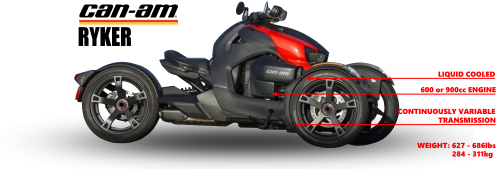
The Ryker is Canam’s stripped down and basic 3 wheeled motorcycle. With a reduced size and weight when compared to their larger machines, these are a fantastic city machines. They also excel at getting you out of the city on the weekends to explore the side roads and backroads here in NB. With a “twist and go” CVT (Continuously Variable Transmission), these machines are simple to use and work well on our practice range. They do not share the same extensive suite of electronics as their bigger machines, but they feature a similar stability management, traction control, and unique ABS system that Canam is known for. Check your pulse if you don’t find our exercises fun on this road hugging 3 Wheeler.
We love motorcycles. In fact each and every one of our valued instructors would love to have one of everything in our garages at home. “Who would not want a Honda Grom?” This passion for motorcycles is reflected in the strict maintenance program these bikes see. That, and an extensive stock of spare parts will ensure that the moment you finally swing your leg over one of our machines, it will be ready to ride.
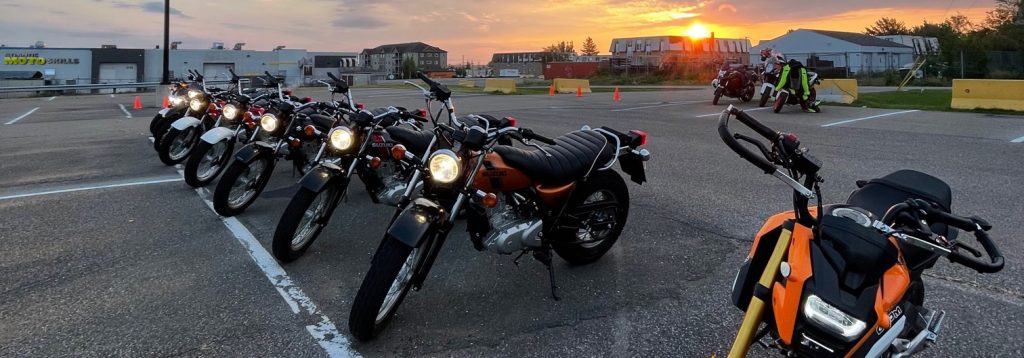
You will see that we take a tremendous amount of pride in our fleet. No duct tape here.